
KCB Bank is looking to expand its clean-energy financing business into thousands of Kenyan schools, colleges and universities, targeting a $460 million investment opportunity as the country accelerates efforts to replace costly and polluting energy systems in educational institutions.
The Kenyan lender is seeking partnerships with development finance institutions, private investors and government agencies to support the transition, potentially opening a new lending market spanning more than 10,000 educational institutions.
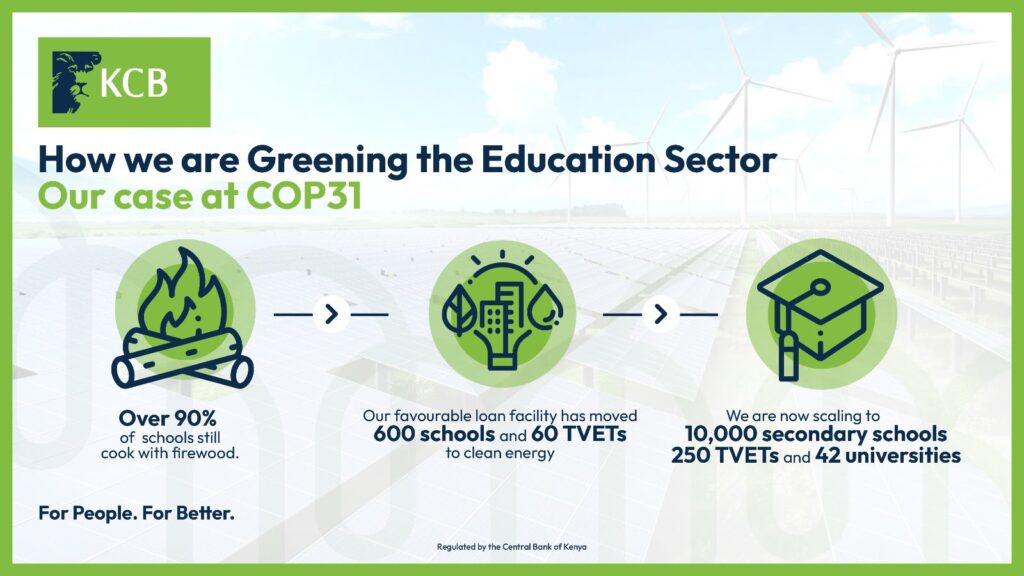
The proposed expansion follows a clean-energy financing programme that KCB has operated since 2022, providing more than Sh2 billion to support 600 schools and 60 technical and vocational education and training institutions (TVETs).
The bank now wants to build on that experience as Kenya seeks to extend cleaner energy technologies to 10,000 secondary schools, 250 TVET institutions and 42 universities.
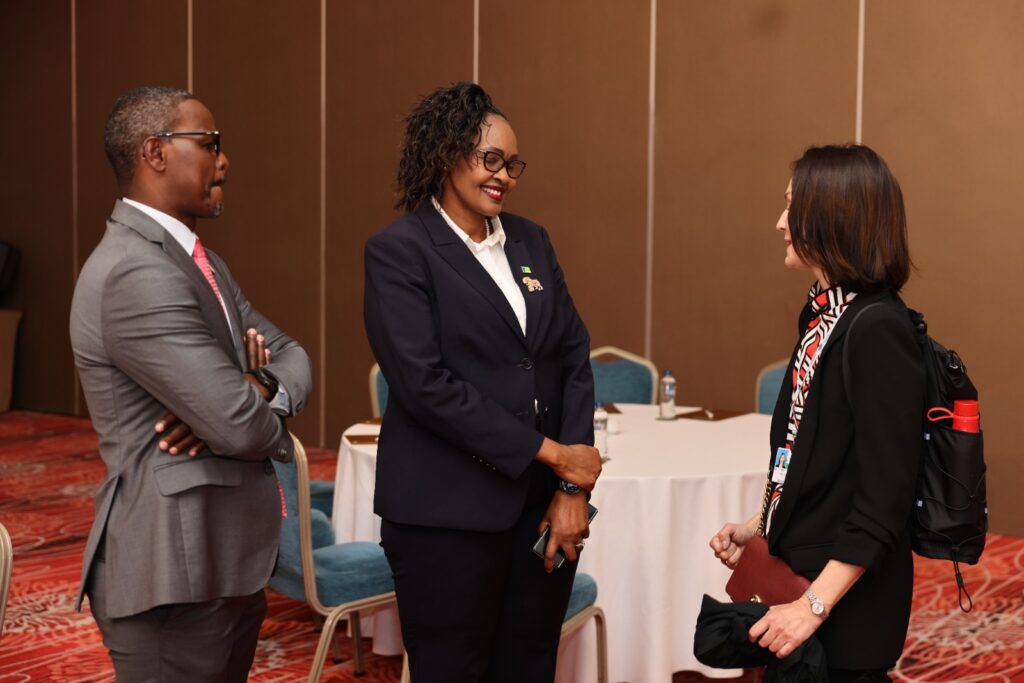
The estimated $460 million financing requirement was presented during discussions at the COP31 climate summit in Antalya, Turkey, where KCB Bank Kenya Managing Director Annastacia Kimtai joined senior government officials to explore ways of attracting investment into the education sector.
For KCB, the proposed expansion could create a substantial new market for green lending, allowing the bank to finance institutional energy infrastructure while supporting Kenya’s climate commitments.
“Access to appropriate financing remains one of the barriers to the clean-energy transition for learning institutions, and KCB is prepared to use its financial expertise and partnerships to help address that gap,” Kimtai said in a separate announcement concerning the bank’s university sustainability partnerships in September.
A New Lending Market for Kenyan Banks
Kenya’s education sector has traditionally relied on government funding, school fees and institutional budgets to finance infrastructure and operational expenses.
Energy is among the recurring costs, particularly for boarding schools and universities that require electricity and fuel for cooking, lighting, laboratories and student accommodation.
Many institutions continue to rely on firewood and charcoal for cooking, exposing them to fluctuating fuel costs and creating environmental and health concerns.
Replacing these systems with cleaner technologies requires significant upfront investment, even where the equipment could deliver savings over its operating life.
That creates an opportunity for commercial banks to develop financing products that allow schools to acquire energy equipment and repay the investment over time.
KCB’s existing programme provides a foundation for such lending, although the bank has not publicly detailed the repayment performance, average loan size or financial returns generated by the projects.
From Sh2 Billion to a Nationwide Programme
The proposed expansion would increase the number of participating institutions from 660 to a potential 10,292, representing a substantial increase in the scale of KCB-supported clean-energy financing.
The $460 million figure represents the estimated financing needed for the broader national programme, rather than money already secured by KCB or a confirmed lending commitment from the bank.
The investment could support cleaner institutional cooking systems, renewable energy installations and related energy infrastructure, depending on the technologies ultimately selected.
KCB has previously sought partners to provide solar energy and clean-energy solutions to schools, including technologies such as LPG and biogas. The procurement initiative demonstrates how the bank has been developing relationships with equipment suppliers and service providers alongside its financing activities.
The opportunity also extends to Kenya’s growing clean-energy industry.
Equipment manufacturers, solar developers, technology suppliers and maintenance companies could benefit from demand generated by a coordinated national rollout.
For businesses supplying institutional energy systems, schools offer a market with recurring energy requirements and potentially long equipment replacement cycles.
However, the programme’s commercial viability will depend on how financing is structured, whether institutions can afford repayments and whether the projected energy savings are realised.
Why KCB Needs Development Finance Partners
Financing public educational institutions presents challenges that differ from ordinary corporate lending.
Many schools operate on constrained budgets and depend on government allocations or student fees, limiting their ability to absorb large infrastructure expenses.
KCB and government officials therefore discussed the use of concessional financing, credit-risk mitigation instruments and technical assistance to attract private capital.
Concessional loans could reduce borrowing costs, while guarantees could protect lenders against some potential losses.
Technical assistance could help institutions identify suitable energy technologies, calculate expected savings and prepare projects for financing.
The approach could enable KCB to expand its lending activities without carrying the entire financial burden of the proposed investment.
It could also allow development finance institutions to channel climate funding into projects with measurable environmental and economic benefits.
Kenya’s Clean Cooking Ambitions
The investment drive comes as Kenya pursues its ambition of universal access to clean cooking by 2028.
Environment Cabinet Secretary Deborah Barasa, who participated in the COP31 discussions alongside Environment Principal Secretary Festus Ng’eno, highlighted the importance of partnerships in accelerating the transition.
Educational institutions represent a potentially significant market because many operate large kitchens that prepare meals for hundreds or thousands of students daily.
Reducing their dependence on traditional biomass fuels could lower demand for firewood, improve air quality and reduce operating costs over time.
For KCB, the business opportunity extends beyond the immediate financing of equipment.
A successful programme could create longer-term relationships with educational institutions and clean-energy suppliers, potentially supporting additional banking services and financing arrangements.
The $460 Million Question
The biggest uncertainty remains how the proposed investment will be financed.
The COP31 discussions identified potential sources and financing mechanisms, but no complete funding package, disbursement schedule or binding investment commitments were disclosed in the reported announcement.
It is also unclear what proportion of the $460 million KCB intends to finance directly and how much would be provided by development finance institutions, government programmes or other private investors.
Those details will determine the programme’s significance for KCB’s loan book and the broader Kenyan banking industry.
If successfully financed and implemented, the initiative could establish educational institutions as a significant market for climate-related lending while creating new demand for clean-energy technologies.
For now, KCB’s Sh2 billion programme offers a starting point for a much larger ambition: transforming the energy needs of Kenya’s education sector into a scalable financing opportunity.