

When Sam Wakoba launched TechMoran in August 2012, Africa’s startup ecosystem was still taking shape. Entrepreneurs were building companies in Nairobi, Kampala, Lagos and other emerging technology hubs, but the media infrastructure around them was limited. International publications covered some of the continent’s technology stories, while mainstream African media largely approached technology through telecommunications, large corporations, mobile money and consumer gadgets. Wakoba saw an opening: the startups themselves deserved sustained attention, particularly the companies that were still too small or too new to attract widespread media coverage. So he built a publication around them.
It was a risky proposition. Africa’s startup economy had not yet produced the scale of venture capital, exits and technology companies that would later make the sector one of the continent’s most closely watched business stories. Wakoba was betting on a market that was still being formed. More than a decade later, he is working with a different kind of platform, one designed to identify and connect early-stage East African companies with investors, corporations, customers and strategic partners.
Before technology, there was writing
Wakoba joined Makerere University in 2004 intending to study Information Science. A year later, he changed direction, moving into Political Science, Sociology and Literature, driven partly by his interest in political ideology and literature. It was a combination that would eventually prove useful to a journalist whose career required him to understand institutions, businesses and people.
Writing had been part of his life long before university. In a 2013 profile by the Bloggers Association of Kenya, Wakoba recalled that reading and writing had been passions since childhood. He wrote poetry and short stories in high school and said he had written nearly 1,000 poems before losing the manuscript.
He graduated in 2009 and entered professional life through a short stint in advertising at East Africa Business Week in Kampala. It was there that his interest in journalism began to take shape. After Business Week, Wakoba spent some time teaching at Kumi University before returning home to continue his studies, but media kept pulling him back. In 2010, he joined African Laughter, a media agency, where he became increasingly exposed to journalism, public relations and media relations.
His career was also developing an analytical dimension. Wakoba worked with The AIM Group, an international business intelligence and research firm covering online marketplaces and classifieds, where he was identified as a researcher and later as an Africa classifieds analyst and reporter. The role exposed him to market intelligence, competitive developments and the businesses emerging around digital marketplaces. AIM Group today describes its work as providing business intelligence, research and consulting to marketplace and classified companies, investors and vendors.
That experience added another layer to his emerging career. He was not only writing about digital businesses; he was studying how online markets, companies and competitors were developing. The combination of research and journalism would become useful as he moved deeper into technology reporting.
His journalism was also beginning to travel beyond the organisations where he worked. His work appeared in publications including ITWeb Africa, PC Tech Magazine, Business Daily, The Standard Extra, The Next Web, TechZulu, Smart Life Magazine, Mom and Dad Magazine and Business Monthly. His work at HumanIPO brought him closer to technology and startups. By 2012, he was HumanIPO’s Technology Reporter, covering companies and technology developments across Africa. Those experiences brought together several strands that would define Wakoba’s career: writing, reporting, research and an interest in how technology changes businesses and markets.
The gap he saw in 2012
By 2012, Wakoba had become convinced that African innovation was being underreported. In a 2021 interview with communications agency Wimbart, he explained that traditional media was still largely focused on established sectors such as agriculture and manufacturing, while technology was comparatively young. There were young Africans leaving university and building companies, but there was not enough sustained coverage of what they were doing.
The idea behind TechMoran was therefore relatively simple: find African technology entrepreneurs early, tell their stories and create a publication around them. The publication launched in August 2012 at a time when many startup founders were still fighting to convince investors, customers and even friends that their businesses were viable. Wakoba was betting that there was value in documenting these companies before the market had made up its mind.
The decision that made TechMoran independent
There is a small episode from the early days of TechMoran that says more about Wakoba’s entrepreneurial character than a conventional résumé could. While still working a full-time job, he recalled that his supervisor wanted him to take down his blog because it was competing with the supervisor’s publication. Wakoba laughed, left the job and continued building the blog.
The story, recounted in the 2013 BAKE profile, captures the risk embedded in TechMoran from the beginning. Wakoba was not launching a publication from a position of institutional security. He was building something while employment, income and professional stability were still variables. The decision gave the publication room to develop on its own terms.
Finding companies before they became obvious
TechMoran’s early coverage provides a record of the technology ecosystem taking shape around it. The publication covered companies and platforms including iROKO Partners, Konga, Cellulant, Paga, DealDey, OLX, Kaymu, Jovago, Kopo Kopo, mFarm, FrontlineSMS, Ushahidi, iCow and iProcure, among others. As the ecosystem matured, its coverage expanded to companies including Paystack, Flutterwave, Twiga Foods, Yoco, Fawry, SafeBoda, Moringa School and Andela.
The importance of that coverage was not that every company became successful. Many did not. Startups fail, companies run out of capital, markets change, products disappear and founders move on. The more important role was informational. A company could build a product that very few people knew existed; TechMoran could find it, interview the founder and create a public record around the business. That story could then be shared with investors, customers, partners and other journalists.
TechMoran consequently became part of the information layer developing around African startups. At a time when international investors were beginning to look more closely at African technology but often had limited local information about young companies, specialist reporting helped make those businesses easier to find and understand.
The stories became bigger than startups
TechMoran did not remain a narrowly defined startup blog. As technology became embedded in the wider economy, its coverage expanded into telecommunications, finance, business, mobile money, consumer technology and digital services. The early archive includes stories about neighborhood security platforms, ecommerce, mobile banking, aviation technology, entrepreneurship programmes, mobile payments and digital financial services.
One story might focus on a young startup while another examined a major telecommunications company or explored how a bank was using mobile technology. The publication was following technology into the industries it was changing, rather than treating it as a separate sector.
The startup beat remained important, but the wider technology economy gave TechMoran room to grow its readership and commercial proposition.
Turning a blog into a business
Recognition came quickly. TechMoran won the Bloggers Association of Kenya’s Best Technology Blog award in 2013, 2014 and 2015. The awards did more than provide credibility. In 2017, Business Daily reported that Wakoba said the recognition helped make TechMoran “more than a blog.” He said the awards attracted more brands, provided resources for research and interviews and increased the publication’s reach by 60 percent.
The awards helped demonstrate that a specialist technology publication could build both an audience and a commercial business around its editorial niche. Brands had a reason to reach TechMoran’s readers, while the publication could reinvest in reporting, research and interviews.
The transition was not automatic. Specialist media businesses have to balance editorial focus against the need for scale, and TechMoran experimented with that balance as it grew.
The experiments beyond TechMoran
Wakoba also tested whether the business could support a broader media portfolio. At different points, the company launched TripMoran, a travel vertical; MachoMoran, a men’s magazine; and GeekMoran, a publication aimed at geek and technology culture and LifeHackSkills,a Lifehacker-like site. The business also experimented with lots of verticals in content and ecommerce and later a public relations agency, and Moran Digital, a digital marketing firm, extending Wakoba’s interests in journalism, communications and media relations into a commercial services business.
The additional ventures were eventually shut down as TechMoran concentrated its resources on its primary technology and startup media operation. The decision narrowed the business back to the area where it had built its strongest identity and audience.
The experiments nevertheless gave Wakoba experience beyond the newsroom: developing new products, testing audiences, running commercial services and deciding which opportunities deserved continued investment.
The years when giving up was an option
The awards and expansion can make the early TechMoran years look inevitable in hindsight. They were not. In a Christmas message to readers in 2013, Wakoba acknowledged that members of the team sometimes felt like giving up. They were afraid and sometimes felt inadequate, but believed they were doing something worthwhile.
The team still had to produce stories constantly, build an audience, find commercial partners, compete for attention and establish credibility in an industry that was itself still developing. TechMoran responded by continuing to broaden its coverage while retaining innovation and entrepreneurship at its centre.

An information layer for Africa’s startup economy
The emergence of TechMoran coincided with a much broader transformation in African media. TechMoran was among the early dedicated African technology and startup publications. The years that followed saw the emergence and growth of a much larger specialist ecosystem, including TechCabal, Disrupt Africa, Techpoint Africa, TechNext, TechCircle, Dignited, TechJaja, TechTrendsKE, TechArena, Tech-ish, Tech in Africa, WeeTracker, Tech Safari, Techbooth Africa, TechFolio, TechSpace Africa, Tech with Muchiri and Aptantech, among others. Kenya also developed a larger business-technology media ecosystem, with media platforms such as BusinessToday, BusinessNow, BusinessVoice, AfricanWomenNetwork, FemmeHub, Swala Nyeti, Nairobi Lifestyle, BusinessTech Kenya with wannabes even taking up Moran as their usernames for their own mileage.
Technology became a regular subject of specialist reporting. Startups became a recognised business category. Venture capital became a regular part of business coverage, and founders increasingly became public figures in their own right.
TechMoran was part of that transition.
Journalism as discovery
Wakoba’s attraction to startups was partly rooted in their ability to challenge established businesses. In his Wimbart interview, he described an early interest in fundraising and in young companies attempting to do things that established corporations normally did. He was drawn to what he called “David and Goliath” situations.
The appeal was not simply that startups were small. It was that a small team could attack a problem that a much larger organisation had failed to solve.
That perspective shaped the kind of companies TechMoran sought out and helped explain its willingness to cover businesses before they had achieved widespread recognition.
More than 26, 000 posts later
The scale of Wakoba’s own output is another measure of the journey. With over 26,000 articles that passed through his hand and more than 3,400 posts under his by line, Wakoba’s creative coverage has changed the African technology and media scene from a relatively small specialist beat into one of the continent’s most closely watched economic sectors with billions poured each year into the sector.
The reporting followed that transformation. Mobile money became digital financial services. Small ecommerce experiments became major marketplaces. Developer communities became startup ecosystems. Technology companies moved into banking, agriculture, transport, education, healthcare and logistics, while African founders became regular subjects of international business coverage.
Wakoba’s work appeared across this transition, both through his own publication and through other media organisations. His role was changing as well. He was no longer only a reporter; he was running a media business and developing a broader understanding of how information, communications and business development intersect.
From newsroom to ecosystem
The next stage of Wakoba’s career moved further beyond conventional journalism. Through Moran Media Group and related ventures, his interests expanded into media, communications, business, education, digital transformation and events.
That broader experience eventually led him back toward startups, but this time with a different objective: creating platforms through which founders could meet the people who could help them build.
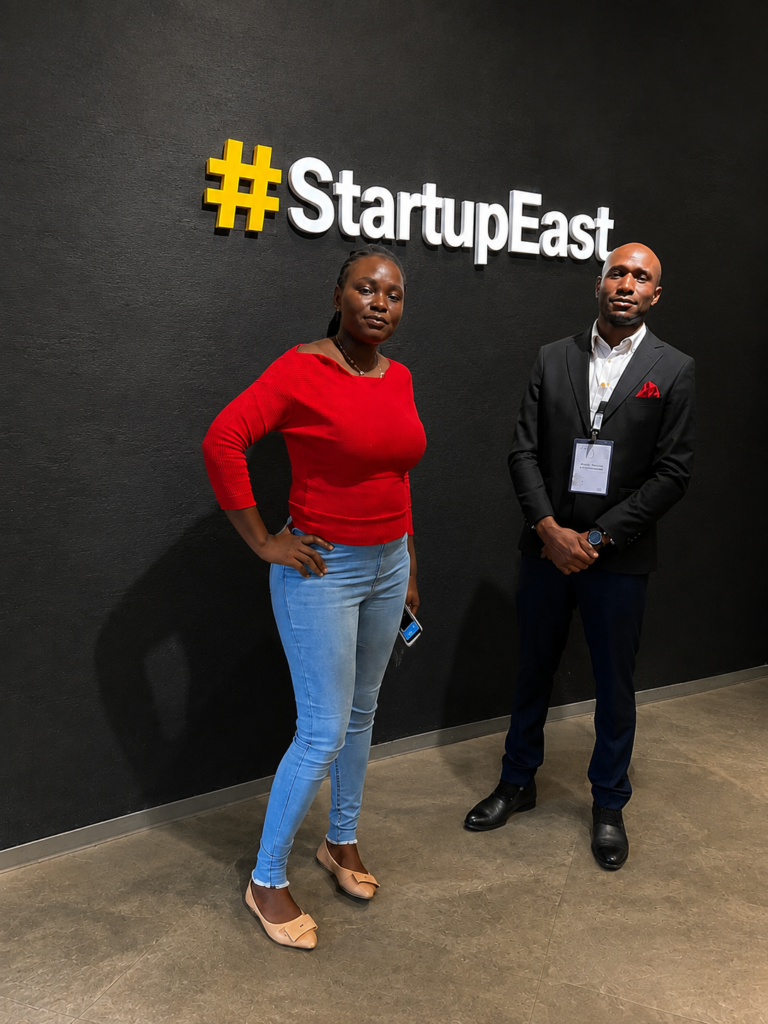
StartupEast and TechNights
In 2026, TechMoran launched StartupEast Conference & Awards. The inaugural event is scheduled for December 1 in Nairobi and is designed to identify early-stage companies operating across East Africa. The programme is aimed at startups that have not yet become household names, with eligible companies operating across sectors including artificial intelligence, fintech, health technology, agritech, climate technology, enterprise software, commerce, logistics, mobility and education. The criteria also focus on younger companies and businesses that have raised less than $2 million.
StartupEast is not being built solely around the annual conference. The programme includes TechNights, a series of technology and startup gatherings intended to create recurring opportunities for founders, investors, corporate executives and other ecosystem participants to meet.
That creates a different model from traditional awards programmes. Recognition is one component, but the larger objective is to create connections that can lead to investment, customers, partnerships, talent and market access. For Wakoba, it represents a move from documenting entrepreneurial activity to creating infrastructure around it.
The model also reflects his experience of watching startups develop over more than a decade. A pitch deck can explain a business, but it cannot always reveal whether the founder can execute. Funding demonstrates investor confidence, but it does not necessarily prove customer demand. StartupEast is consequently designed to look beyond the presentation and identify companies with the potential to surprise the market.
The next generation
The first generation of Africa’s technology economy created companies that changed how the continent was perceived. M-Pesa transformed mobile money, while companies in payments, commerce, agriculture, logistics, transport and financial services followed. The next generation is likely to emerge from a wider range of sectors and markets, including cities outside the traditional startup centres.
That is the market StartupEast is trying to reach. Its combination of an annual conference, awards and recurring TechNights gives Wakoba a platform for identifying founders, introducing them to capital and commercial opportunities, and building relationships around companies while they are still relatively young.
For someone who began his technology career by looking for stories about entrepreneurs, the role is now considerably broader.
Wakoba is no longer simply deciding which founder deserves an article. He is helping create the rooms in which founders can meet investors, customers and partners and building a pipeline through which those relationships can continue beyond a single news cycle.
The career arc is therefore less about moving away from journalism than expanding what can be done with the access, relationships and knowledge accumulated through it.
TechMoran gave African startups a media platform at a time when few specialist publications were doing so. StartupEast and TechNights are an attempt to build the next layer around the companies that come after them.