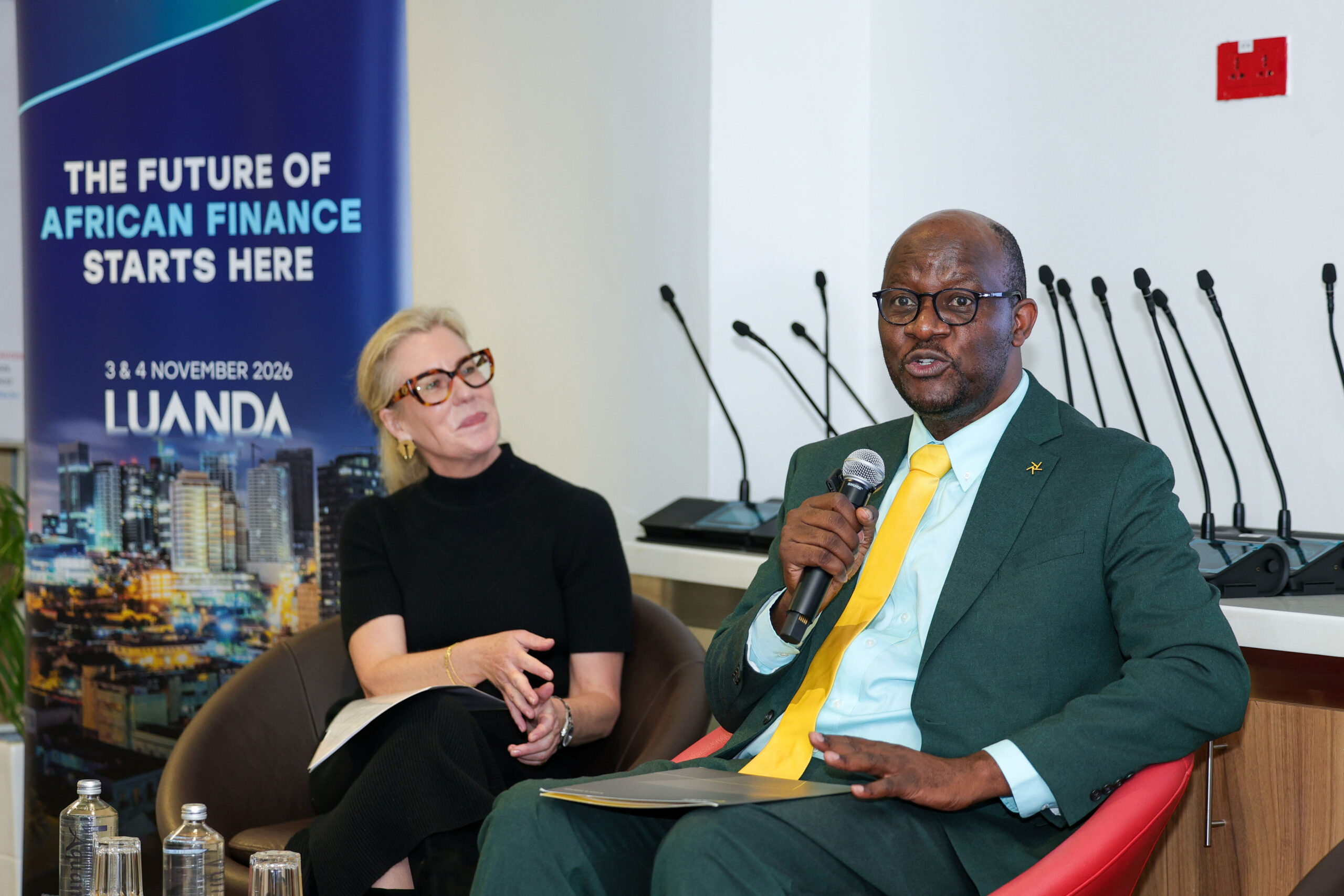
Luanda will become the meeting point for Africa’s financial industry in November when more than 1,250 bankers, investors, regulators and policymakers gather for the annual Africa Financial Summit, placing Angola’s efforts to reshape its financial system at the centre of a wider debate over how the continent should finance its next phase of growth.
The Africa Financial Summit, or AFIS, will be held in the Angolan capital on Nov. 3 and 4. It is the first time the conference has been held in Southern Africa and the first edition in a Lusophone country, extending a gathering that was established in 2021 by Jeune Afrique Media Group and the International Finance Corp.
The choice of Luanda reflects a broader shift in the summit’s agenda. Rather than focusing solely on attracting foreign capital, AFIS is putting greater emphasis on mobilising savings and investment within Africa, developing domestic capital markets and building financial institutions capable of funding infrastructure, businesses and economic diversification.
That question is particularly relevant for Angola.
The oil-producing economy is seeking to modernise its banking sector, strengthen financial regulation and develop its capital markets while reducing its dependence on hydrocarbons. AFIS estimates Angola’s gross domestic product at about $115 billion and ranks it as the continent’s seventh-largest economy. The summit’s organisers describe the country as an emerging financial hub, pointing to reforms, infrastructure investment and the development of the Angolan Stock Exchange and Derivatives, or BODIVA.
The timing also reflects a difficult international financing environment. African governments and businesses have faced a more selective global capital market, while development needs in infrastructure, energy, manufacturing and digital services continue to grow. AFIS says its 2026 discussions will focus on mobilising local resources, continental financial integration, digital transformation and strengthening African financial institutions.
The gathering will bring together senior figures from across the financial system, including IFC Managing Director Makhtar Diop, African Development Bank President Sidi Ould Tah, Angola’s Finance Minister Vera Daves de Sousa and DRC Finance Minister Doudou Roussel Linkunde Li-Botayi.
Other confirmed participants include Guinea’s Economy, Finance and Budget Minister Mariama Ciré Sylla, Gabon’s Economy and Finance Minister Thierry Minko, Jean-Claude Kassi Brou, governor of the Central Bank of West African States, West African Development Bank President Serge Ekué and Kenya Capital Markets Authority Chief Executive Officer Wyckliffe Shamiah.
Executives from the private sector include Britam Group Chief Executive Officer Tom Gitogo, Wave Mobile Money Group Regional Director Coura Carine Sène and BODIVA Chief Executive Officer Cristina Dias Lourenço.
The summit’s emphasis on domestic capital reflects a long-running challenge for African economies: how to turn the continent’s own pools of savings, pension assets and institutional capital into financing for productive investment.
Manuel Moses, chief executive of the African Trade Insurance Agency, said financial institutions could help direct more domestic capital towards businesses and productive sectors by sharing risk and facilitating transactions in local currencies.
“The financial sector plays a critical role in mobilizing domestic capital at scale into productive sectors,” Moses said.
That ambition extends beyond banks. AFIS brings together insurers, fintech companies, mobile-money operators, capital-market institutions, development-finance organisations and regulators, reflecting how the boundaries between traditional financial services and newer digital businesses are changing across African markets. The summit says more than 1,200 senior financial-sector leaders attend its annual gathering, alongside more than 40 ministers, central-bank governors and senior regulators.
The 2026 programme will include discussions on banking, capital markets, insurance, fintech and digital finance, as well as regulatory harmonisation and financial inclusion. The AFIS-Deloitte Barometer will also present findings on economic confidence among financial executives, investment in artificial intelligence, risk exposure and sustainable finance.
For Angola, hosting the summit provides an opportunity to showcase its financial reforms to investors and institutions from across the continent. For AFIS, the move to Luanda broadens the geographical reach of a conference that has previously been hosted in other African financial centres.
Amir Ben Yahmed, chief executive of Jeune Afrique Media Group and founder of AFIS, said the Luanda meeting would highlight Angola’s liberalisation efforts and create opportunities for participants to build regional partnerships.
Manuel Antonio Tiago Dias, governor of the National Bank of Angola, described AFIS as a forum where the continent’s financial ecosystem could work collectively on its major challenges.
The International Finance Corp., which has supported AFIS since its creation, will co-host the 2026 summit.
The organisers are also seeking to extend the summit’s influence beyond the annual meeting. AFIS’s current action framework sets 11 targets for African banks, insurers, fintechs, capital-market players, regulators and governments, with goals extending towards 2030-35.
The Luanda gathering will therefore be about more than the development of Angola’s financial industry. It will test how far Africa’s financial institutions can build deeper regional markets and mobilise more of the capital generated within the continent itself.