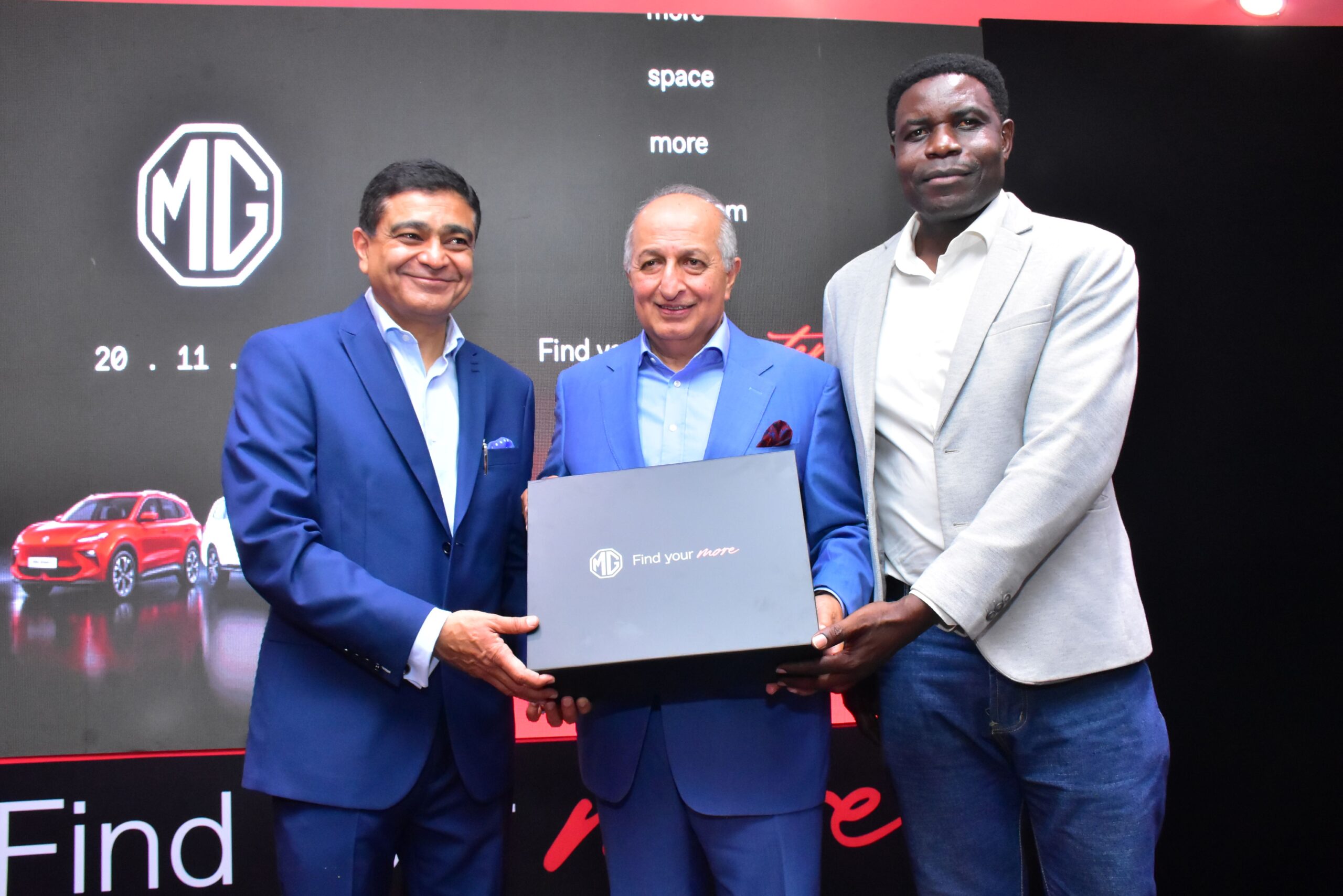
Kenya’s Simba Corporation plans to assemble vehicles from British heritage car brand MG at its Mombasa plant, using a 1 billion shilling ($7.7 million) electric vehicle production line as it expands into the country’s growing electric mobility market.
The company, which has been appointed MG’s exclusive distributor in Kenya, said the investment at its Associated Vehicle Assemblers (AVA) facility would support local production of MG vehicles alongside electric vehicles already being assembled for public transport and ride-hailing operators.
MG, founded in Britain in 1924 and now owned by China’s SAIC Motor, is expanding its presence in African markets as demand for electric vehicles increases among businesses and individual motorists.
The Mombasa production line employs 60 technicians trained in battery handling and electrical systems. Simba Corporation did not provide a timetable for MG assembly or disclose planned production volumes.
“Kenya has an opportunity to build more of this industry at home, and we are committed to playing our part through sustained investment and partnerships,” Simba Corporation Chairman Adil Popat said.
The company is seeking to benefit from Kenya’s efforts to encourage local vehicle assembly and reduce dependence on imported automobiles.
Local production could also help MG compete with imported second-hand vehicles, which dominate Kenya’s passenger car market, although the company has not disclosed how assembly would affect retail prices.
Simba Corporation said MG had secured more than 40% of Kenya’s new electric passenger car and SUV sales in 2026 ahead of its official launch, underscoring its early position in a market that remains small compared with conventional vehicle sales.
The company has secured initial fleet orders from electric mobility company Drive Electric, which purchased 25 vehicles, and state-controlled electricity distributor Kenya Power, which has taken delivery of four electric cars for its operations at the Ruaraka Transport Hub.
Corporate fleet operators are emerging as important customers for electric vehicle distributors in Kenya, where lower fuel and maintenance costs are encouraging businesses to consider alternatives to petrol and diesel vehicles.
Simba Corporation launched four MG models in Kenya, including the electric MG4 EV Urban hatchback, priced from 4.5 million shillings, and the MG S5 EV family SUV, priced from 7.2 million shillings.
The MG S5 EV has a driving range of up to 450 kilometres under the WLTP testing standard.
The company also introduced the petrol-powered MG ZS compact SUV, starting at 4.5 million shillings, and the MG D90 seven-seat four-wheel-drive SUV, available in petrol and diesel variants, priced from 8.3 million shillings.
An additional electric model, the MG S6 EV AWD, is expected to enter the Kenyan market in 2027, with a manufacturer-stated driving range of up to 500 kilometres.
Simba Corporation Chief Executive Dinesh Kotecha said the company was targeting customers who would otherwise consider buying imported used vehicles.
“Customers want to know what the car costs, what it will cost to run and what support they will get long after they drive away,” Kotecha said.
The group plans to convert its Aspire Centre in Nairobi’s Westlands district into a dedicated electric vehicle workshop offering charging, servicing and diagnostics.
MG and Simba Corporation are also offering introductory pricing on the first 100 vehicles sold in Kenya, although they did not disclose the discounts.
The planned assembly operation adds to investment in Kenya’s automotive manufacturing industry as the country seeks to attract international vehicle brands and develop domestic production capacity.
For Simba Corporation, the move represents an expansion beyond vehicle distribution into electric vehicle manufacturing and supporting infrastructure, with future production dependent on demand in Kenya’s developing electric mobility market.